Rolls-Royce Ghost (RR21) Tuning Guide 2026 — Body Kits, Wheels & Performance


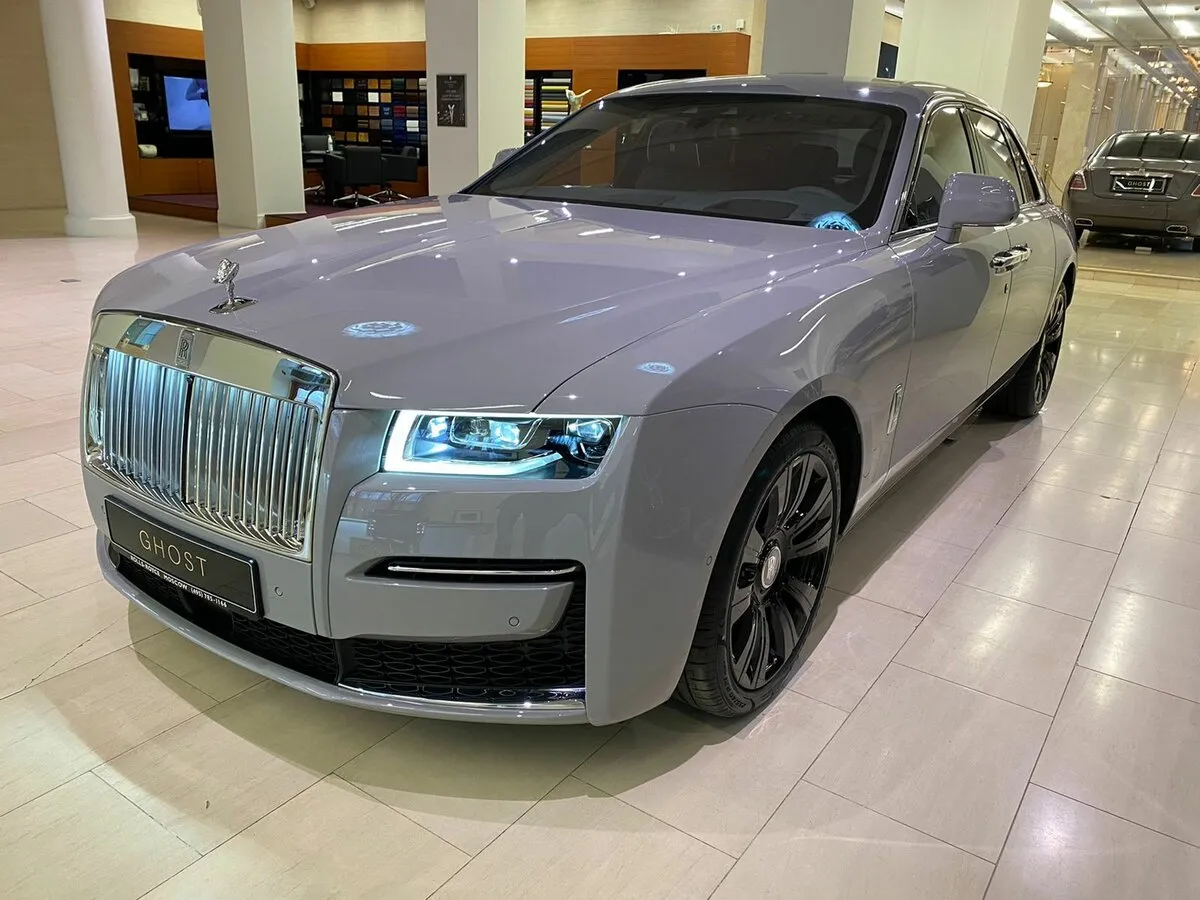
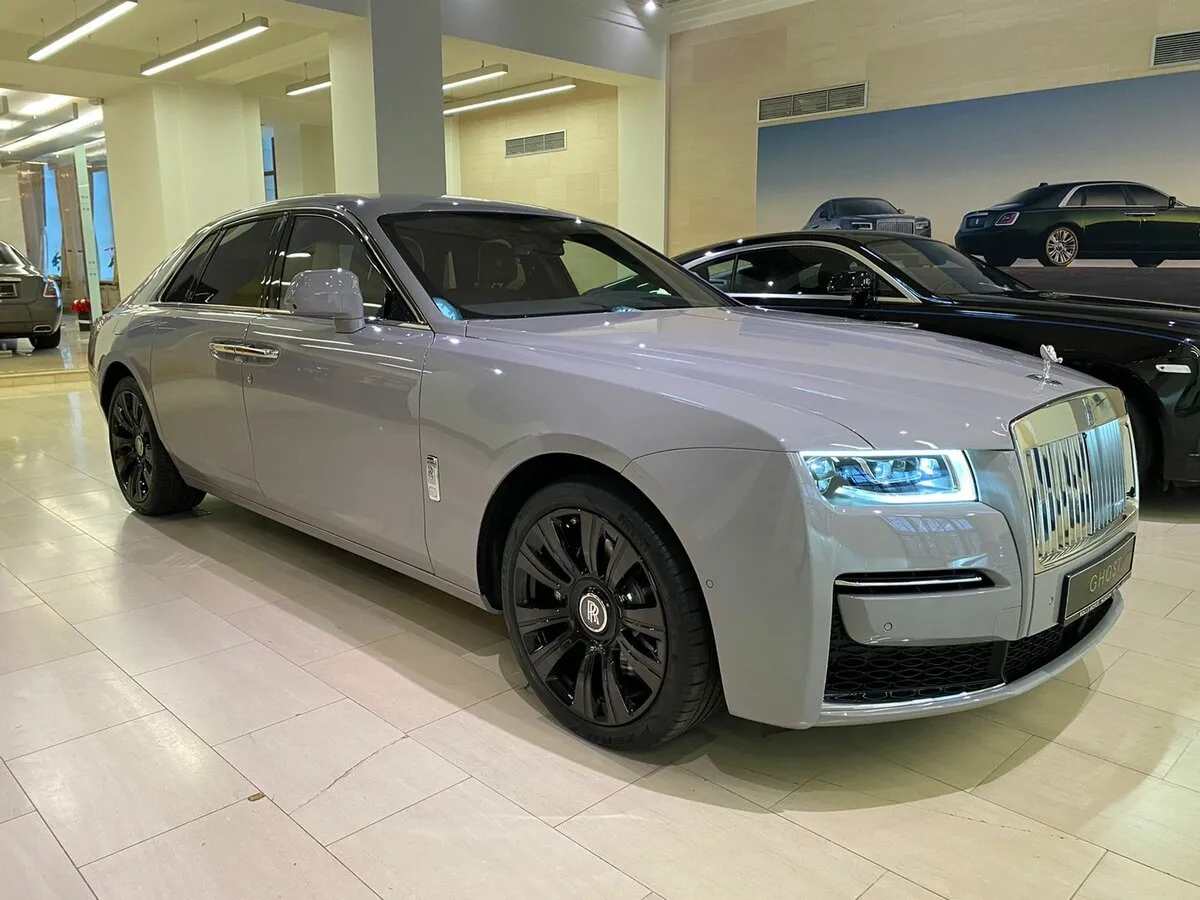
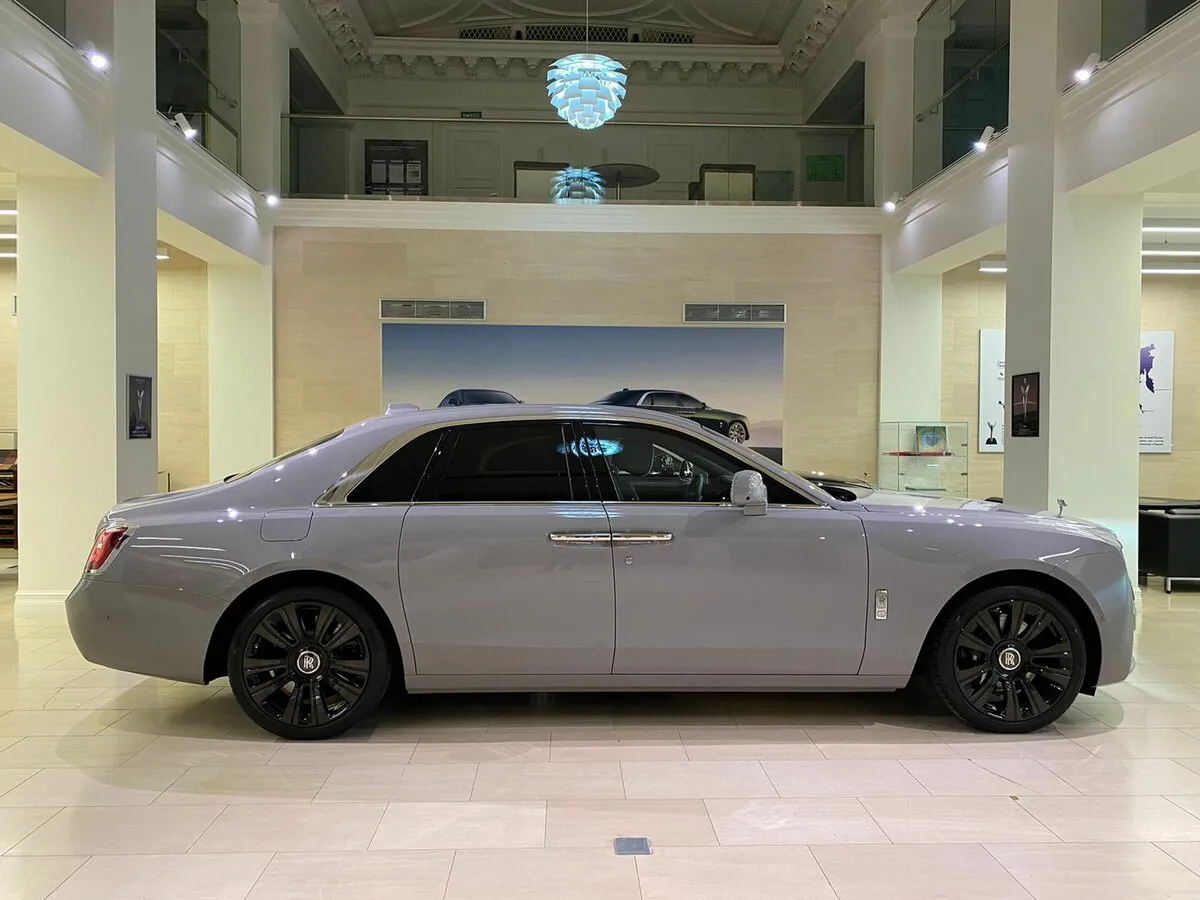
The Rolls-Royce Ghost second generation (project code RR21, launched 2020) is the quietest production sedan on earth and arguably the most technically advanced car Rolls-Royce has ever built. Beneath the understated sheetmetal sits the "Architecture of Luxury" all-aluminium spaceframe shared with Phantom VIII, Cullinan and the electric Spectre, powered by a 6.75-litre twin-turbo V12 (N74B68) producing 563 hp and 850 Nm, paired with a GPS-predictive ZF 8-speed satellite-aided automatic, all-wheel drive and rear-wheel steering. Rolls-Royce engineers famously had to add a tiny amount of white noise into the cabin because the first Ghost II prototypes were so silent that occupants reported feeling nauseous. This guide covers every meaningful upgrade available for the Ghost RR21 — Spofec and Mansory body programmes, forged 22-inch wheels that respect the Planar suspension, Manhart 700 hp ECU work, Akrapovic and Capristo exhaust options, starlight headliner customisation with Carlex Design and Vilner — plus a brief acknowledgment of the first-generation Ghost (2010-2020, BMW F01-platform) for owners of the older car.
Ghost RR21 — Key Specifications
Platform Overview — Architecture of Luxury & the Silent V12 GT Philosophy
The Ghost RR21 is the second Rolls-Royce built on the Architecture of Luxury aluminium spaceframe, after Phantom VIII and Cullinan. It is not a rebodied BMW 7-Series — that description applies only to the first-generation Ghost (2010-2020), which used a heavily modified F01 7-Series floorpan. The new spaceframe is specific to Rolls-Royce, 30 percent stiffer than the first-generation car, and allows the Ghost to share the vast majority of its underbody, suspension hardpoints and electronic architecture with Phantom and Cullinan. That common chassis is a critical detail for tuners — suspension, wheel, brake and interior work developed for Cullinan and Phantom VIII transfer directly to the Ghost RR21, which is why specialists like Spofec (Novitec) and Mansory can offer unified programmes across the three cars. The N74 V12 is derived from BMW's N74 6.6-litre V12 (also used in the BMW 760Li F02/G70), bored to 6.75 litres and fitted with Rolls-Royce-specific twin-turbochargers, intake and exhaust for an entirely different delivery character: this is not a V12 tuned for peak output, it is a V12 tuned to deliver 850 Nm from 1,600 rpm in total silence.
Body Kits
Spofec Overdose (by Novitec) — the dominant Ghost tuner
Spofec is Novitec's Rolls-Royce-only sub-brand (Stetten, Germany) and is by a wide margin the most established tuner of the Ghost RR21. Their flagship programme is the Overdose widebody: full fender flares approximately +40 mm per side, a redesigned carbon front lip with deeper air intakes, carbon side skirts with integrated LED blade lighting, a carbon rear diffuser with quad outlets and a subtle carbon bootlid spoiler. Each panel is hand-laid carbon or PUR-RIM in Rolls-Royce-spec paint match — Spofec's paint lab holds factory reference samples for every bespoke Rolls-Royce colour, including Crystal over Arctic White, Tuscan Sun and their own Spofec colours. The Overdose kit is delivered with Spofec SP3 forged 22-inch wheels (more below), Spofec adjustable lowering module that drops the air-suspended car 40 mm without disabling Planar, and a complete interior retrim programme. Overdose is the Ghost body kit to specify if you want a restrained, factory-plus stance that will not alarm the Rolls-Royce service department.
Mansory — full carbon widebody and forged 22-24"
Mansory's Ghost RR21 programme is the theatrical alternative to Spofec. It replaces the front bumper entirely with a carbon unit featuring enlarged radiator intakes and a splitter, adds bolt-on carbon fender flares (+55 mm per side), a carbon bonnet with vents, carbon mirror caps and door blades, a carbon roof spoiler and a two-stage carbon rear diffuser. The kit is paired with Mansory's own forged 22-24-inch wheels and a fully bespoke interior in any combination of leather, Alcantara, forged carbon and hand-cut aluminium. Mansory-built Ghosts are the cars parked on Avenue Princesse Grace in Monaco and outside the Burj Al Arab; they are aggressively finished, uncompromisingly loud visually, and deliberately contrast the Rolls-Royce factory aesthetic. Note that 24-inch fitment is available cosmetically but compromises the Planar suspension's ability to isolate the body — most thoughtful Mansory customers cap wheel diameter at 22 inch for ride quality.
Wald International Black Bison — executive JDM aero
Japanese tuner Wald International (Osaka) offers its Black Bison aero programme for the Ghost — a more formal, Japanese-executive treatment featuring a reprofiled front lip with chrome trim, bright-metal fender vent accents, bespoke side skirts and a restyled rear diffuser with subtle rear lip spoiler. The visual language reads "Ginza chauffeur" rather than "Monaco supercar" — restrained, chromed, tailored. Wald pairs Black Bison with its own forged wheels in 22-inch, typically in a concave ten-spoke mesh design. This is the right kit if the Ghost is registered in a market where the RR factory look is already established and the owner wants a noticeable but diplomatic upgrade.
Hofele Design — elegant German executive treatment
Hofele Design (Stuttgart) offers a quieter, more conservative Ghost RR21 programme: a subtle front apron overlay, discreet bright-metal window surrounds, reprofiled side sills and a formal rear diffuser element with chrome accents, paired with Hofele's own 22-inch forged wheels. Panel quality and paint-match are among the best in the Rolls-Royce aftermarket. Hofele builds are a natural choice if the Ghost is chauffeur-driven, if the owner wants a noticeable upgrade without attracting attention, or if preserving long-term residual value on the original bespoke specification matters. The kit integrates cleanly with factory Spirit of Ecstasy retractable mechanisms and all driver-assistance sensors.
Ares Modena — Italian interior craftsmanship
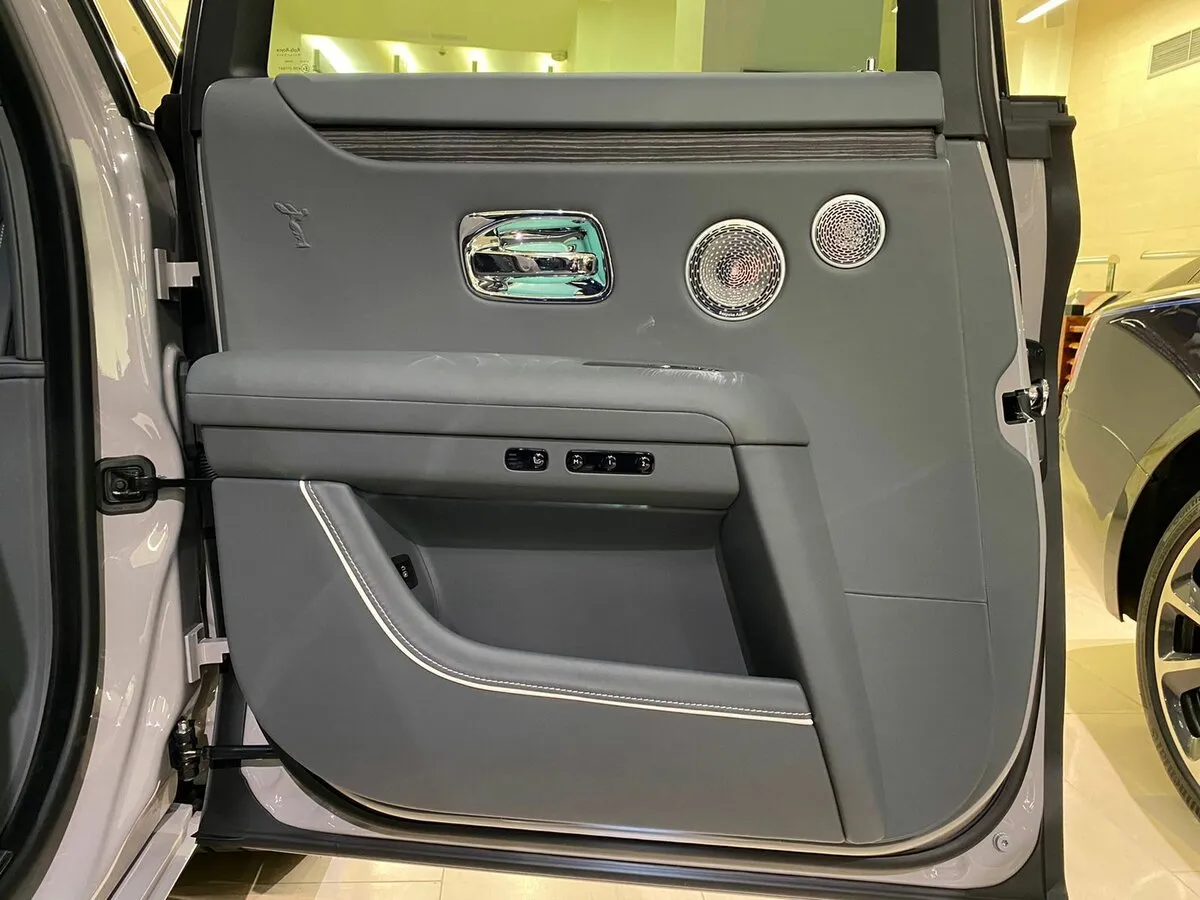
Ares Modena (Italy) is primarily an interior house rather than a body-kit tuner, and is included here because any complete Ghost build will consider cabin retrim. Ares offers bespoke leather retrim in Italian hides (Foglizzo and Conceria Camaleonte), custom stitching patterns, contrast piping, carbon fibre or macassar-ebony veneer replacement, custom threshold plates and embroidered monograms. Ares typically pairs with the Spofec exterior programme for customers who want Italian interior craftsmanship on top of German exterior tuning.
Wheels — 22" Forged Sweet Spot & Planar Suspension Constraints
The Ghost RR21 ships from factory with 21-inch wheels; 22-inch is available through Rolls-Royce Bespoke. Aftermarket builds almost universally step to 22 inch — it is the Planar-suspension sweet spot, delivering a visibly more imposing stance without overwhelming the road-preview camera system's ability to isolate unsprung mass. Our recommended specification is 22×9.0J ET36 front and 22×10.5J ET48 rear, wrapped in Continental SportContact 6 or Pirelli P Zero PZ4 in 265/40 ZR22 front and 295/35 ZR22 rear — both tyres are available in the RR-specific "noise cancellation foam" construction that maintains cabin acoustic isolation. Recommended forged wheel options: Spofec SP3 (the definitive Ghost wheel, six-spoke forged, developed with Novitec on the actual car), Vossen Forged S21-01, ANRKY RS1 or S2-X3, and HRE S200 or Vintage 501. Twenty-four-inch is possible cosmetically but it compromises Planar — the FlagBearer stereo cameras scan the road 220 metres ahead and pre-command the air struts to prepare for imperfections, but above roughly 22-inch diameter the increase in unsprung mass means the struts cannot fully absorb what the cameras see. Most experienced Ghost builders cap at 22 inch for this reason. All forged sets must ship with Rolls-Royce-spec self-levelling wheel centres (the RR badge stays upright at all speeds) — both Spofec SP3 and Vossen Forged S21-01 support the factory centre mechanism; some third-party wheels do not, and switching to fixed centres is a visible downgrade on any Rolls-Royce.
Performance — Manhart MH8 800, Akrapovic & Capristo
The 6.75-litre N74B68 twin-turbo V12 is factory-tuned for 563 hp and 850 Nm, and — like every modern twin-turbo engine — has meaningful headroom. The dominant ECU programme for the Ghost is Manhart Performance's MH8 800 conversion: ECU recalibration plus a Manhart stainless-steel exhaust system with valve control takes the Ghost from 563 hp / 850 Nm to approximately 700 hp and 1,050 Nm — numbers Manhart publishes under the MH8 800 programme designation. The figure "800" refers to PS (metric horsepower), which rounds to ~700 hp. This is a remarkable output for a 2,490 kg limousine, and it transforms cruising performance — the Ghost does not feel faster from a standing start (the ZF transmission is traction-limited, not power-limited), but it accelerates from 120 to 200 km/h on an autobahn or UK motorway with completely effortless reserves. Spofec offers a comparable ECU-plus-exhaust package for owners who want to keep the build within a single tuner's ecosystem. For exhaust-only upgrades, the Akrapovic Slip-On Line is the reference: titanium construction, full valvetronic integration with the factory exhaust control, OEM-grade fit, TÜV-approved. Capristo offers a valve-controlled equivalent with slightly more aggressive acoustic tuning when opened — both are fully silent in Comfort mode, which is critical on a Ghost.
Interior — Starlight Headliner, Carlex Design & Vilner
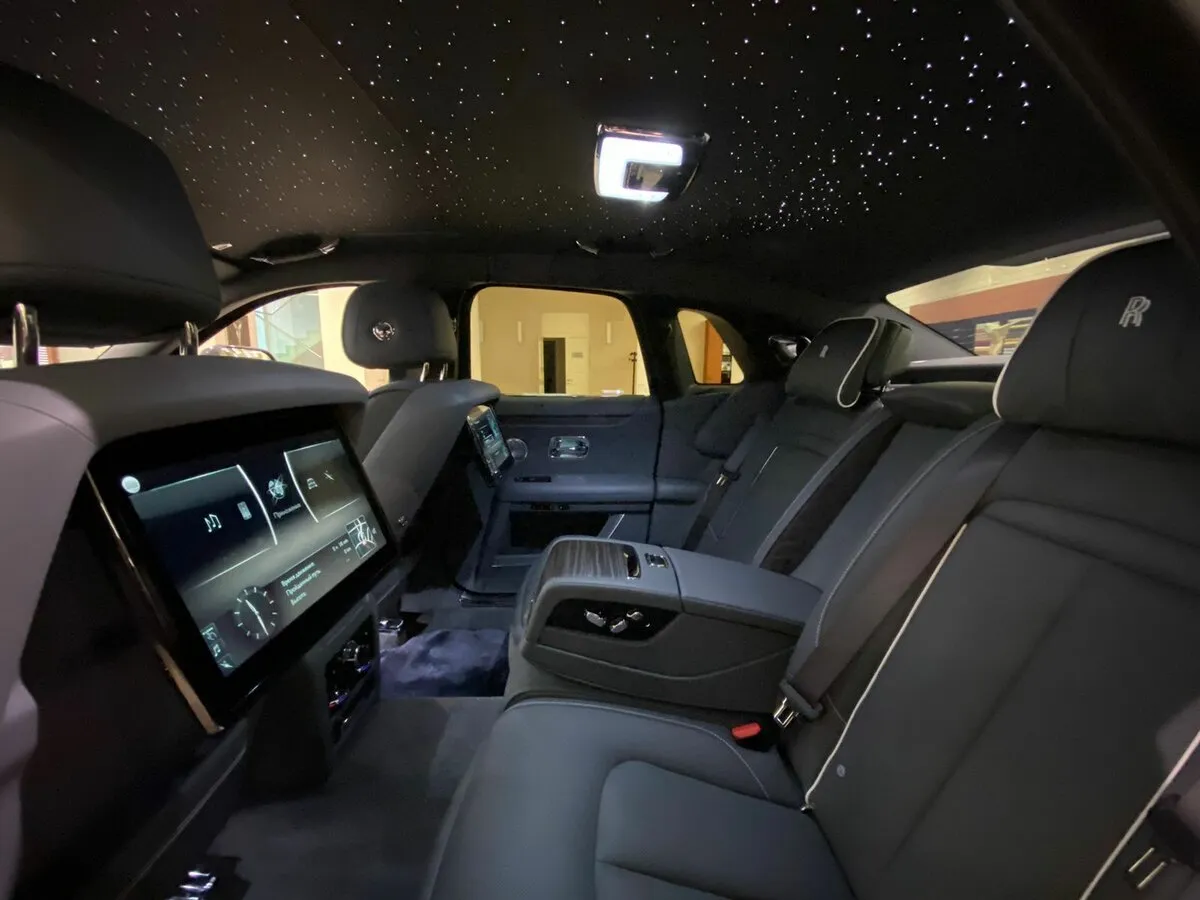
The Ghost's signature interior option is the Starlight Headliner — 1,340 hand-woven fibre-optic strands mimicking a night sky, fully customisable via Rolls-Royce Bespoke to replicate the constellations visible at any latitude/longitude/date (commonly used to recreate the sky above the owner's birthplace at the moment of birth). Aftermarket extension of this programme is offered by Carlex Design (Poland) and Vilner (Bulgaria) — both can retrim the entire cabin in bespoke Italian hides, add custom threshold embroidery, swap the veneers for forged carbon or exotic woods, and extend the Starlight theme to door cards and rear parcel shelves. Both houses also offer rear-cabin entertainment upgrades — Bowers & Wilkins Reference system recalibration, rear-seat 4K screens and rear-console fridges.
Track vs Street: Why Ghost Owners Don't Track
Ghost RR21 is, after Manhart MH8 800, one of the most powerful four-door cars in the world — 700 hp and 1,050 Nm in a chauffeur-driven spaceframe with AWD. The question of whether it belongs on a circuit has a clear answer: no, and that answer is engineered into the car, not imposed by owner preference. The Ghost weighs 2,490 kg before options and before Manhart's exhaust; its Planar suspension — with FlagBearer road-preview stereo cameras, upper wishbone dampers and active air struts — is calibrated from first principles for boulevard glide, not lateral grip. The camera system scans the road 220 metres ahead and commands the struts to pre-compress or pre-extend so that potholes and expansion joints vanish; it is a ride-isolation system, not a cornering-support system. The brakes are vented steel from factory — substantial, but never carbon-ceramic (Rolls-Royce does not offer a carbon-ceramic option on Ghost, in contrast to Bentley Continental GT Speed or BMW M5). Two laps of a circuit would fade the pedal decisively, and neither Spofec nor Manhart offers a track-brake conversion for Ghost because the demand does not exist.
Frame the choice this way: Ghost is "the world's quietest 700 hp car" — a grand-touring limousine optimised for continent-crossing, not for circuit timing. It does its best work on the A5 from Basel to Frankfurt, the I-5 between Los Angeles and San Francisco, the ring road around Dubai. Compare it to its stablemates: Cullinan (heavier still at ~2,660 kg, never tracked — an SUV chauffeur-car with the same philosophy) and the discontinued Wraith Coupe (the closest any modern Rolls-Royce came to a sport coupe, and even Wraith was never a circuit car). Ghost owners who want occasional track days buy a second car for that purpose — typically a Bentley Continental GT Speed, an Aston Martin DB12, or a Porsche 911 Turbo S. Ghost stays where it was engineered to operate: at 200 km/h on a quiet motorway with the rear passengers asleep. That is not a limitation — it is the entire point of the car.
Frequently Asked Questions
How does first-generation Ghost tuning differ from RR21 tuning?
Substantially. First-generation Ghost (2010-2020) rides on a modified BMW F01 7-Series platform with the 6.6-litre N74B66 V12 in 563 hp or (Ghost Black Badge) 603 hp trim. Body kits from Spofec, Mansory and Wald are offered for both generations, but the panels are not interchangeable — fender flares, front aprons and diffusers are generation-specific. Wheel fitments are similar (same 5x112 PCD), but Planar suspension is unique to RR21 — first-generation Ghosts use a simpler Adaptive Dampers plus air suspension, so the FlagBearer constraint does not apply and 22-24-inch fitments behave differently. Manhart's ECU programme is also generation-specific. If you own a first-generation car, check every part's compatibility with the Ghost I chassis number before ordering; if you own an RR21, order from a tuner's current RR21 catalogue.
Should I fit 21-inch or 22-inch wheels, and can I go to 24?
Factory 21-inch gives the best pure ride quality because unsprung mass is minimised and the Planar system has the most envelope to work with. 22-inch is the aesthetic and engineering sweet spot — visibly more imposing, still within Planar's isolation envelope, broadly supported by Spofec, Vossen Forged, ANRKY and HRE. 24-inch is possible cosmetically and Mansory offers it, but it compromises Planar perceptibly — road imperfections that the cameras should have absorbed are instead felt through the seat. Our recommendation for Ghost RR21 is 22×9.0J ET36 front and 22×10.5J ET48 rear in forged construction, with Rolls-Royce-spec self-levelling wheel centres. Always recalibrate Planar ride-height sensors via the factory diagnostic tool after any wheel-diameter change.
Will tuning void my Rolls-Royce warranty?
Non-invasive cosmetic modifications (body kits, wheels, exhaust slip-ons) typically do not void unrelated warranty items such as infotainment or electronics in most EU, UK and US markets — Rolls-Royce dealers assess powertrain claims against whether the modification caused the failure. An ECU flash that raises boost pressure on the N74B68 V12, however, can void powertrain warranty on the engine and ZF 8-speed transmission. Reputable tuners (Manhart Performance, Spofec by Novitec) document their work carefully and many offer their own parallel warranty products covering the components they have modified. Always request a written pre-install condition statement and statement of work before the car is on the ramp; keep factory parts in storage for future resale to an owner who prefers stock.
Why don't Rolls-Royce Ghost owners track their cars?
The engineering answer: Ghost weighs 2,490 kg, its Planar suspension is calibrated for ride isolation rather than lateral grip, its brakes are vented steel without a carbon-ceramic factory option, and its Manhart 700 hp Stage 1 output is effortless at autobahn speeds but brake-fade-limited on a circuit. The philosophical answer: Ghost is a grand-touring limousine engineered around silence and isolation — tracking it would be analogous to racing a Savile Row suit. Owners who want track days run a Bentley Continental GT Speed, Aston Martin DB12 or Porsche 911 Turbo S alongside the Ghost, using each car for its intended purpose. Cullinan follows the same philosophy (never tracked); the discontinued Wraith Coupe was the closest any modern Rolls-Royce came to a sport coupe, and even Wraith was not marketed or engineered as a circuit car.